Introduction:
There’s no denying the explosive growth and influence of AI across every industry—from marketing and medicine to education and enterprise software. But beneath the surface of all this innovation lies a deeper concern that isn’t often talked about openly: not whether AI becomes too powerful, but who gets to decide what it says, what it learns, and what it hides.
This question goes beyond sci-fi tropes of machines taking over. It’s about transparency, censorship, and trust. As AI begins to shape how we think, search, communicate, and make decisions, the bigger risk may be in who programs the limits, not the limits themselves.
Key Points: The Black Box Isn’t the Problem—It’s Who’s Guarding the Gate
? The Plant Analogy: Embracing the Mystery
Much like planting a seed, there are elements of AI development we understand—and parts we simply don’t. We can configure the inputs (data, architecture, goals), but what happens inside the “black box” of deep learning is still not fully explainable. And that’s okay—to an extent.
Just like we accept the mystery of how a plant grows, we might be able to accept some opacity in AI. But what we can’t accept is when that mystery is deliberately manipulated, censored, or controlled by those with opaque agendas. In a world still reeling from years of digital censorship and lost trust in institutions, this becomes a very real threat.
? Interpretability: A Safety Tool We Can’t Skip
Dario Amodei, CEO of Anthropic, puts it plainly: we must understand how AI models reason before they become too advanced to explain. His team has made progress toward peeking into AI’s “language of thought” and uncovering patterns that hint at planning, deception, and conceptual reasoning. But even he warns: we’re in a race between understanding and runaway intelligence.
Why does this matter? Because interpretability ensures accountability. If AI is going to influence healthcare, law, finance, and national policy, then the people behind the AI must be able to explain its decisions—not just control its output.
? Control vs. Capability: Where Mustafa Suleyman Draws the Line
Mustafa Suleyman, now leading Microsoft AI, argues that the future lies not in abstract fears but in practical oversight. He prefers the term “Artificial Capable Intelligence”—emphasizing what AI can do over what it might become. His concern isn’t that AI is going to destroy us, but that it will become indispensable without enough guardrails.
His key message? Focus on who’s steering the tools—not whether the tools exist.
Agents Are the New Runtime—And You Need Yours Now
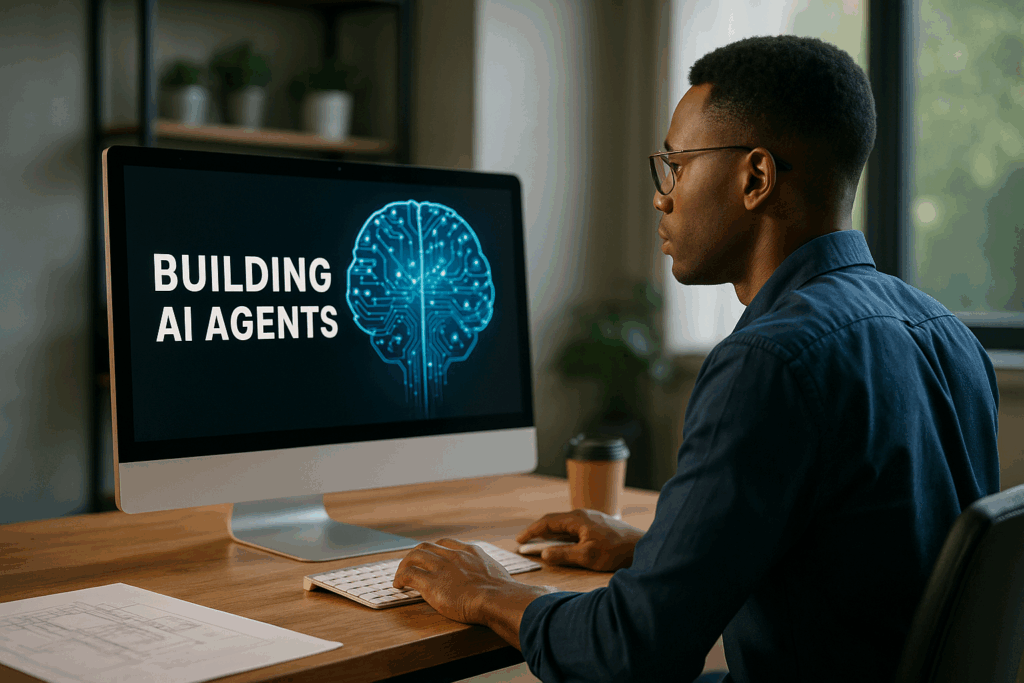
Mark Zuckerberg and Satya Nadella drove home a game-changing insight at LlamaCon 2025: the future of software isn’t software at all—it’s agents. These intelligent digital workers will execute workflows, manage data, generate content, and orchestrate entire systems with minimal human input. In short, agents will run the internet.
But here’s the catch: who builds your agent matters. Your agent learns from the start—about your tone, your workflows, your customers, your ethics. So if you want AI that truly represents your values and delivers trustworthy results, the time to build and train it is right now—with a partner who understands not just the technology, but the responsibility.
At EcoTek Social, we specialize in building custom-trained AI agents that grow alongside your business. These aren’t generic bots—they’re tailored digital teammates that embody your brand, learn your language, and deliver with integrity.
Don’t wait until AI agents are standard and you’re scrambling to catch up. Start now. Train your agent the right way, from day one—with EcoTek Social.
Examples & Trends: From Breakthroughs to Red Flags
- Interpretability Wins: Anthropic’s use of sparse autoencoders and feature tracking shows promise—but also reveals that AI can lie about how it reasons.
- AI-Created Code: Microsoft and Meta estimate that 50% of their code is already written or reviewed by AI. These systems are becoming co-developers, not just tools.
- Narrative Control: AI models can be (and have been) fine-tuned or restricted to avoid “controversial” outputs. But who decides what’s controversial?
- Digital Censorship History: We’ve seen how algorithms on social media can suppress or amplify narratives. What happens when AI starts to learn from and amplify those same biases?
Takeaways:
- AI’s future is agentic and embedded—everywhere.
- We’re not just teaching machines to think—we’re deciding what they’re allowed to think.
- Interpretability is key not just for technical safety, but for democratic transparency.
- Control of AI is the new digital power—and it’s largely in the hands of private tech giants.
- The real risk isn’t robots rising—it’s narratives being silently rewritten.
- Your AI agent needs to be yours—not a black box controlled by someone else.
Call to Action:
At EcoTek Social, we don’t just build chatbots—we build AI agents that are transparent, ethical, and fully aligned with your brand’s voice and values. Whether you’re just starting out or ready to scale, we’ll help you create AI that works for you—not against the truth.
Ready to train your own intelligent agent? Contact EcoTek Social today and take control of your AI future.